
World Cup should be every 2 years! Here’s why!
The FIFA World Cup is arguably the most popular sporting event in the world, with billions of people tuning in to watch the tournament every four years. However, there has been increasing debate in recent years about whether the World Cup should be held more frequently, with some suggesting that it should be held every two years instead of every four. In this article, we will explore the reasons why the World Cup should be held every two years.
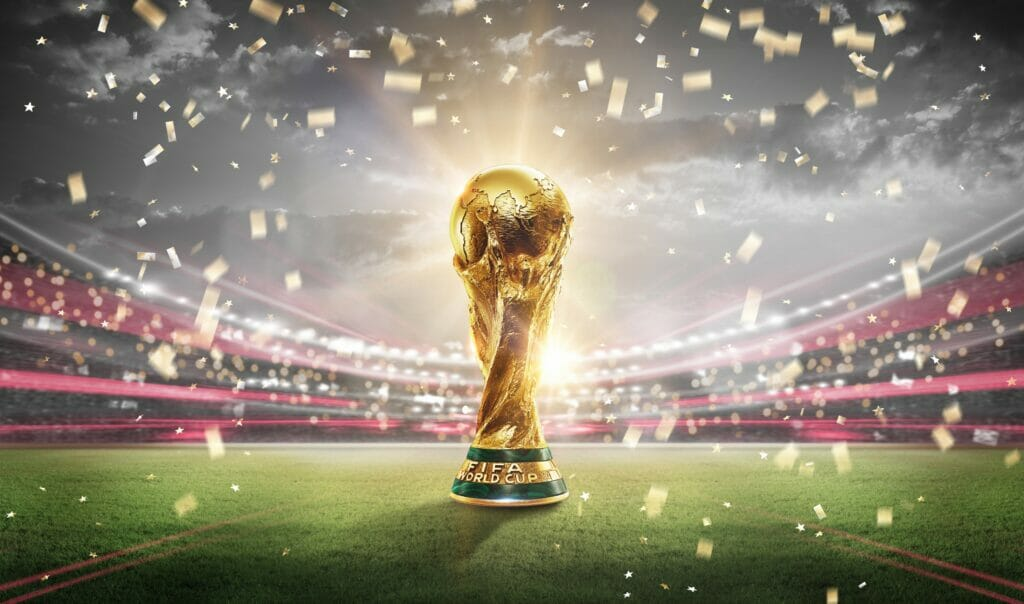
One of the primary reasons why the World Cup should be held every two years is the increased revenue it would generate for FIFA and the participating nations. The tournament is a massive revenue generator, with FIFA earning over $6 billion from the 2018 World Cup in Russia. By hosting the tournament every two years, FIFA could potentially double their revenue from the event. Additionally, smaller nations that may struggle to qualify for the World Cup every four years would have more opportunities to participate and generate revenue for their football programs.
Holding the World Cup every two years would also provide more opportunities for emerging football nations to participate and showcase their talent on the global stage. Currently, only a select few countries have the opportunity to compete in the World Cup every four years. By holding the tournament every two years, more nations would have the opportunity to qualify and gain experience competing against top-level competition. This would help to promote football development in these countries and increase the global reach of the sport.
Another benefit of holding the World Cup every two years would be the enhanced fan experience. The tournament is a massive global event that brings together fans from all over the world. By holding the tournament more frequently, fans would have more opportunities to attend and participate in the event. Additionally, the increased frequency would help to maintain interest in the tournament and prevent it from becoming stale or predictable.
Holding the World Cup every two years would help to improve the competitive balance of the tournament. Currently, the four-year gap between tournaments can result in significant changes to the makeup of teams and their respective strengths. By holding the tournament more frequently, teams would have less time to make significant changes to their rosters or strategies, which would help to level the playing field and ensure a more competitive tournament.
Allowing players to miss one World Cup would provide them with additional time to recover and prepare for the next tournament. It would also allow teams to rotate their squad and give younger, less experienced players a chance to shine on the international stage. This would benefit both the players and the teams, as they would have the opportunity to develop and grow, potentially leading to stronger teams and more competitive matches.

In addition, allowing players to miss one World Cup would not necessarily reduce the quality of the tournament. It would simply give teams the flexibility to manage their players’ workload and avoid potential burnout. The World Cup is a highly competitive tournament, and every team wants to put their best foot forward. Allowing players to miss one tournament would not necessarily decrease the quality of the competition, as there would still be many talented players and teams competing.
The world cup is every 4 years, and a player misses out on a world cup due to an injury you can say that oh they have a chance in the next world cup in 4 years time. For most elite professional footballers their career is very short, average is about 8-11 years. So, if a player does get injured before a World Cup, they can only compete in 2 more World Cup at most, if they changed the system to every 2 years, he or she can compete twice as much in the world cup, allow them to have more chances to win the World Cup.
One of the main benefits of holding the World Cup every two years is that it would provide fans with more frequent opportunities to watch high-quality football. The World Cup is a highly competitive tournament that features some of the best players in the world, and many fans eagerly anticipate the tournament every four years. However, holding the tournament every two years would provide fans with more opportunities to see their favourite players and teams compete at the highest level.
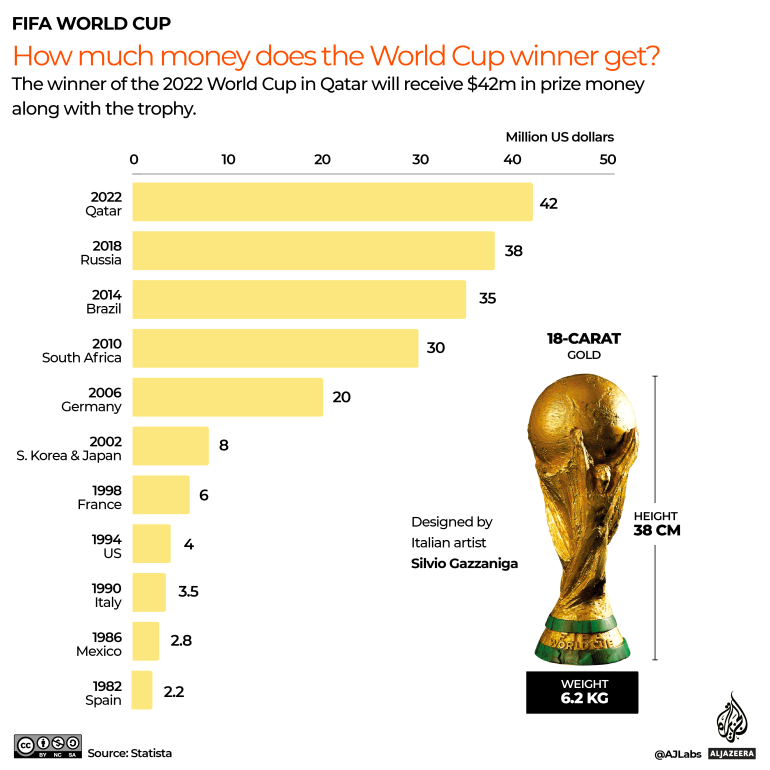
FIFA allocated $440 million in prize money for the 2022 World Cup in Qatar.
Though a very significant sum, FIFA had a revenue budget of $4.6 billion in 2022, with broadcasting rights contributing $2.6 billion alone in income.
FIFA confirmed in April 2022 that the Qatar World Cup champions were to receive a record $42 million in prize money.
Simply qualifying for the 2022 World Cup saw each team paid a $1.5 million participation fee. But once at the tournament, sides were able to make much larger sums by progressing through the knockout stages.
Group stages – $9m, Round of 16 – $13m, quarterfinals – $17m, Fourth place – $25m, Third place – $27m, Runner-up – $30m & Winner – $42m.
Croatia came 3rd and received $27m, they can reinvest that money into grass root football, improve their youth system, hopefully they can have another Luka Modric or Davor Šuker come thru.
Qatar was the first national in the World Cup to get knocked out, they received $9m, it’s debatable if they should have been in the World Cup in the first place but they can use the money and invest in the next generation.
Investing in youth football is critical for the long-term development and success of the sport. Youth football is where the next generation of players is developed, and investing in these young players can help create a strong pipeline of talent for the future.
Investing in youth football means providing young players with the opportunity to learn the fundamentals of the game and develop their skills. This will help them become better players as they progress through their football careers.
Youth football provides a pathway for young players to move up to higher levels of competition. Youth football programs can bring communities together by providing a platform for young players to come together and play the sport they love. This can create a sense of unity and pride within the community, which can have a positive impact beyond the football pitch.
In conclusion, there are several compelling reasons why the FIFA World Cup should be held every two years instead of four. The increased revenue, more opportunities for emerging football nations, increased player participation and development, enhanced fan experience, and improved competitive balance all make a strong case for more frequent tournaments. While there would be logistical challenges to overcome, the benefits of a more frequent World Cup would likely outweigh the drawbacks.
Catch you in the next one.
You must be logged in to post a comment.