
In the ever-evolving landscape of football, stories of transformation and resurgence resonate deeply. One such tale of extraordinary resurgence unfolds in the heart of Italy, where Gian Piero Gasperini orchestrated a remarkable metamorphosis that saw Atalanta rise from the shadows of relegation threats to become a formidable force in Serie A and beyond. Gasperini’s tactical brilliance, unwavering commitment to youth development, and adaptability have propelled Atalanta to unprecedented heights, inspiring not just fans but the entire footballing world.
The Journey of Resurgence: Gasperini Tactical Brilliance

On a fateful day in 2016, Gian Piero Gasperini assumed the role of Atalanta’s manager. Little did anyone know that his arrival would herald a seismic shift in the club’s fortunes. Facing initial adversity, Gasperini’s first season began with struggles, leaving the club languishing at the foot of the Serie A table. However, his visionary tactics gradually ignited a remarkable resurgence, propelling Atalanta to six consecutive Serie A victories and an impressive fourth-place finish. This miraculous turnaround marked the inception of a footballing revolution in Bergamo.
Nurturing Tomorrow’s Stars: Gasperini Trust in Youth
Central to Gasperini’s transformative journey has been his unwavering trust in youth. Atalanta’s ascent is underpinned by the nurturing of budding talents, a testament to Gasperini’s eye for potential and dedication to fostering young players. Among the youth gems that have flourished under his guidance are:
- Andrea Conti: A product of Atalanta’s academy, Conti’s development epitomizes the club’s commitment to homegrown talent.
- Mattia Caldara: Gasperini’s faith in Caldara’s abilities saw him play a pivotal role in Atalanta’s renaissance.
- Giorgio Scalvini: Emerging from the academy, Scalvini‘s potential has garnered attention, showcasing Gasperini’s knack for spotting rising stars.
- Franck Kessié: potential was already evident, foreshadowing his remarkable rise to become a pivotal figure in Gasperini’s tactical revolution at Atalanta.
- Rasmus Højlund: Emerging talent with clinical finishing and dynamic movements upfront, promising a bright future.
The Tactical Revolution: Fluid Systems and Adaptability
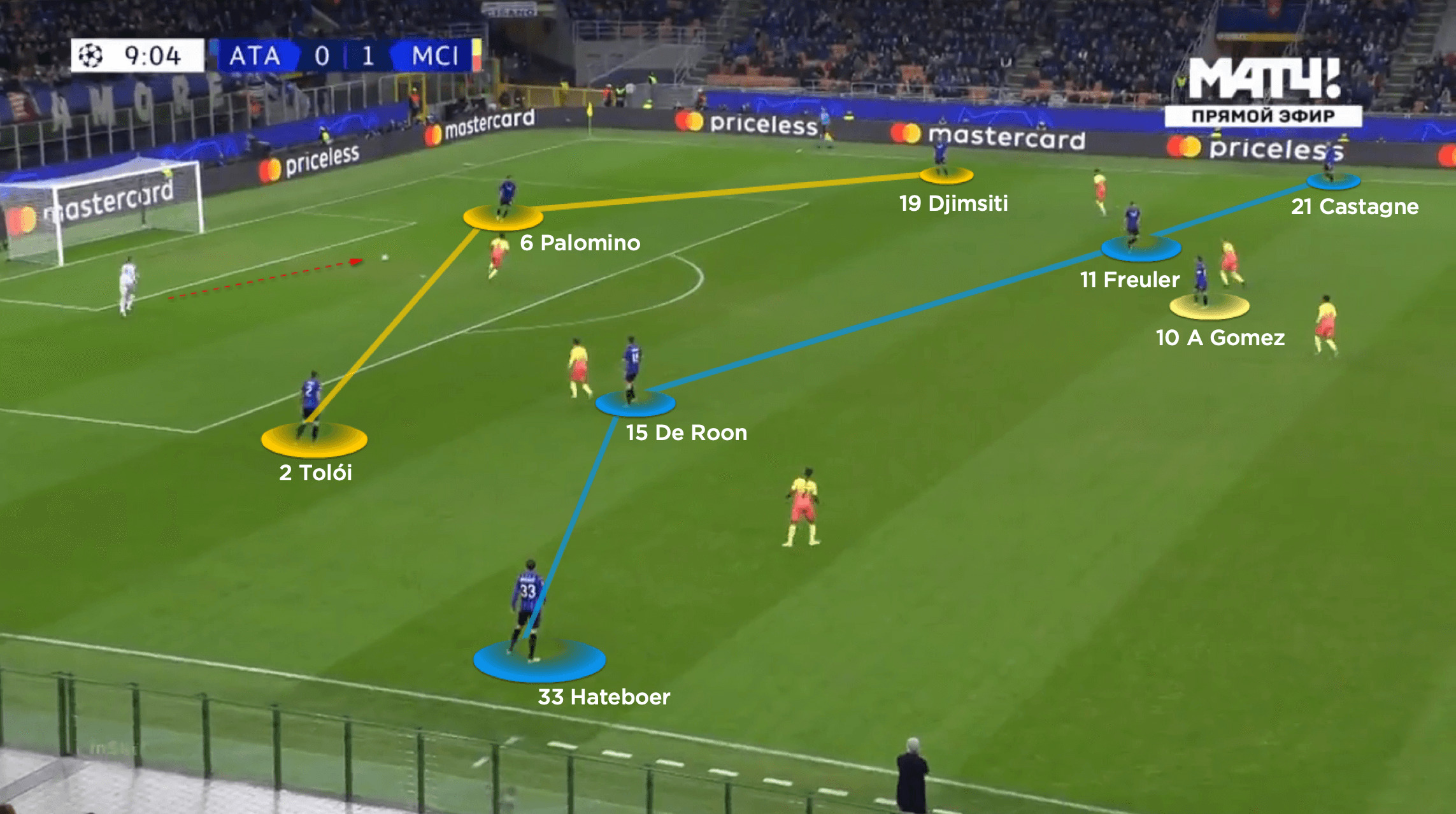
Gasperini’s tactical prowess is the heartbeat of Atalanta’s metamorphosis. His strategic masterstroke revolves around a fluid 3–4–3 formation, marked by intricate passing, off-the-ball movement, and high-pressing. Gasperini’s tactical acumen extends to employing variations of the 3–4–3 system, adapting to exploit opponents’ vulnerabilities. His team’s signature style of play emphasizes quick transitions and dynamic movements, underpinned by a robust defensive structure. This tactical flexibility underscores Gasperini’s ability to extract the maximum potential from his squad.
Evolution towards Pragmatism
Recent times have seen Gasperini’s tactical philosophy evolve, exemplifying his adaptability. While maintaining his preference for a three-at-the-back formation, Gasperini has introduced pragmatic elements, favouring counterattacks and quicker transitions over prolonged possession. This evolution reflects his deep understanding of his players’ strengths and the nuanced demands of modern football. Atalanta’s tactical transformation serves as a testament to Gasperini’s willingness to evolve his approach to achieve sustained success.
The Gasperini Aesthetic: Tactical Ingenuity Unleashed

Gian Piero Gasperini’s tactical approach at Atalanta is a masterpiece of ingenuity, designed to captivate fans and overwhelm opponents. At the heart of this approach is the fluid 3–4–3 formation, a canvas on which Gasperini paints his vision of dynamic, attacking football. This tactical setup is not a static structure but a dynamic framework that seamlessly transitions between different shapes and systems, depending on the phases of the game.
During possession, Gasperini’s Atalanta orchestrates intricate passing sequences, patiently building up from the back. The defensive trio becomes the fulcrum of the play, with one central defender often pushing higher to initiate attacks. The wing-backs surge forward to provide width, while the midfielders roam intelligently, creating passing triangles and overloading areas of the field. Gasperini’s philosophy places a premium on off-the-ball movement, with players constantly interchanging positions to disorientate opponents and open up spaces for penetration.
Defensive solidity is not sacrificed for attacking prowess. When out of possession, Atalanta seamlessly transitions into a disciplined defensive unit. The fluid 3–4–3 transforms into a compact 5–3–2 or 5–2–3, denying space centrally and forcing opponents wide. Gasperini’s team presses high, suffocating opponents and regaining possession quickly. The ability to fluidly switch between attacking and defensive shapes is a testament to Gasperini’s tactical acumen and his players’ versatility.
In the world of football, where tactics are like a carefully crafted dance, Gian Piero Gasperini’s influence shines as a beacon of innovation and transformation. His tenure at Atalanta has been nothing short of a footballing revolution. Gasperini’s tactical brilliance has breathed life into a team that was once languishing in the lower tiers, elevating them to the upper echelons of Italian football and beyond. It’s not just about winning matches; it’s about redefining the way the beautiful game is played.
Imagine a conductor orchestrating a symphony, each instrument playing its part in perfect harmony. That’s Gasperini on the sidelines, conducting his team’s movements with intricate precision. His 3-4-3 formation is the canvas on which his masterpiece unfolds. The team’s shape is not rigid but fluid, adapting seamlessly to different phases of the game. When in possession, Atalanta’s players interweave like threads in a tapestry, passing and moving, creating patterns that bewilder opponents. The wing-backs surge forward, the midfielders provide support, and the attackers probe relentlessly. It’s not just about scoring goals; it’s about weaving a narrative of attacking beauty.
Catch you in the next one.