
The Beautiful Game or the Political Game? Exploring the Intersection of Politics and Football
Politics and football are two areas that have historically intersected, with the sport often being used as a platform to express political views or advance political causes. Here are some examples of politics in football:
-
Nationalism: Football can serve as a tool for promoting nationalism and patriotism, with national teams often being seen as symbols of their country’s identity and values.
-
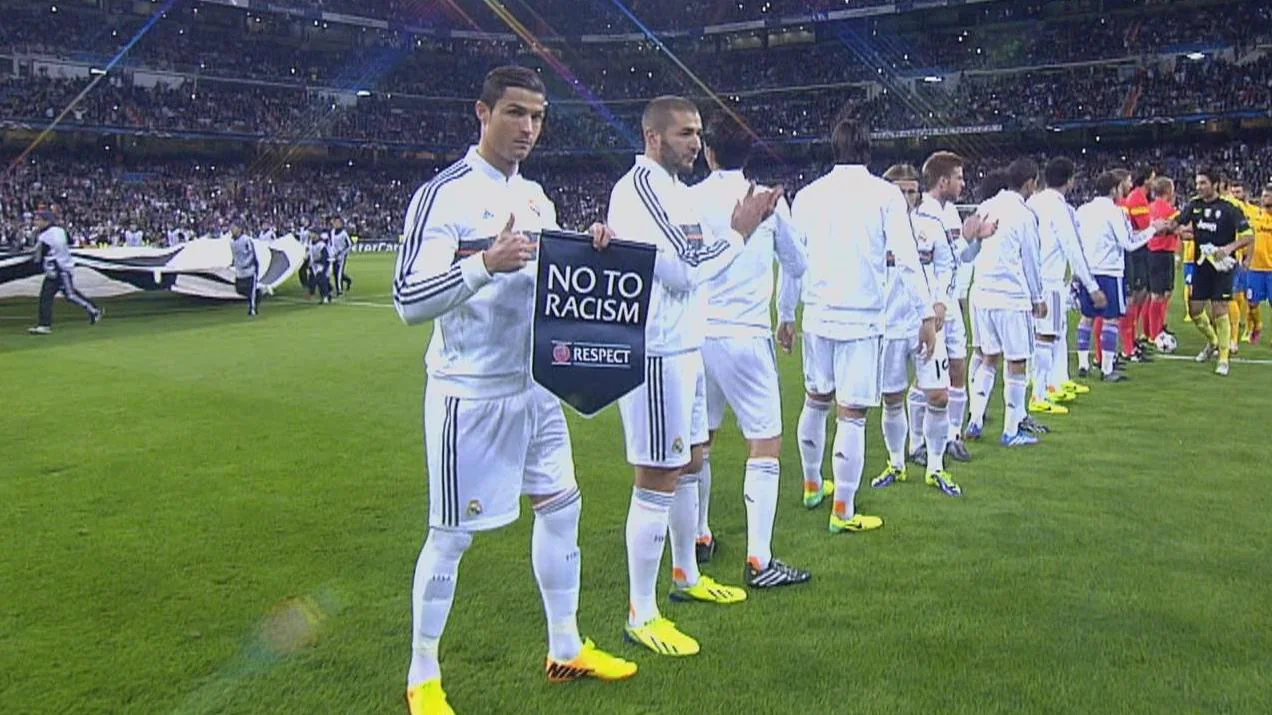
Racism: Racism has been a longstanding issue in football, with players and fans alike experiencing racist abuse. Football can also be used as a platform to raise awareness about racial inequality and discrimination.
-
Gender equality: Women’s football has often been overlooked in the past, but there has been a growing movement for gender equality in the sport. Many players and organizations are advocating for equal pay and resources for women’s teams.
-
LGBTQ+ rights: Football can also be used to promote LGBTQ+ rights and inclusion. Some players have come out publicly as LGBTQ+ and there have been efforts to create more inclusive environments for LGBTQ+ fans and players.
-
Political statements: Football players and teams have also used the sport to make political statements. For example, some players have taken a knee before games to protest racial inequality, while others have refused to play in countries with poor human rights records.
Racism in football is unfortunately a longstanding issue that has persisted for decades. It takes many forms, from overtly racist incidents such as players being subjected to racial slurs, to more subtle forms of discrimination such as bias in hiring practices or media coverage.
Many players have been subjected to racial abuse from both opposing players and fans. This can include racist slurs and chants, as well as physical abuse.
Even though football is a global sport with players from many different backgrounds, there is still a lack of diversity in leadership positions and coaching staff. This can make it more difficult for players from underrepresented groups to succeed in the sport.
There have been accusations of media bias against players of colour, with some commentators using racial stereotypes or focusing on negative aspects of players’ lives.
There have been cases where players or fans have engaged in racist behaviour butt have not faced significant consequences. This can send the message that racism is not taken seriously in football.
It is true that Pep Guardiola, the manager of Manchester City, was fined £20,000 by the Football Association (FA), the governing body of football in England, for wearing a yellow ribbon in support of Catalan independence during a match in March 2018.
At the time, the FA charged Guardiola with violating its rules prohibiting the display of political symbols during matches. Guardiola subsequently accepted the charge and the fine but continued to wear the yellow ribbon in public as a symbol of his support for Catalan independence.
The issue of Catalan independence is a controversial and sensitive one, and the FA’s decision to fine Guardiola sparked debate about the role of politics in football and the limits of free speech for players and managers. Some argued that Guardiola had a right to express his political views, while others argued that he should have respected the FA’s rules and kept politics out of football.

The Black Lives Matter (BLM) movement has had a significant impact on football and sparked conversations about politics and racial justice in the sport. The movement gained momentum in the wake of the killing of George Floyd by police officers in the United States in May 2020, and protests against police brutality and racial injustice spread across the globe.
In football, players, coaches, and teams have shown their support for the BLM movement in various ways. For example, players in the English Premier League took a knee before matches as a symbol of their support for racial justice, and teams wore Black Lives Matter logos on their shirts. The movement also led to discussions about racism and discrimination in football and calls for greater action to address these issues.
However, the response to the BLM movement in football has been mixed. While many have praised players and teams for showing their support, others have criticized the politicization of football and the use of the sport as a platform for political messages. Some fans have even booed players who took a knee before matches, sparking further controversy and debate.
Ultimately, the BLM movement has highlighted the need for greater awareness of racial justice issues in football and has prompted discussions about how the sport can be more inclusive and equitable for all players and fans.
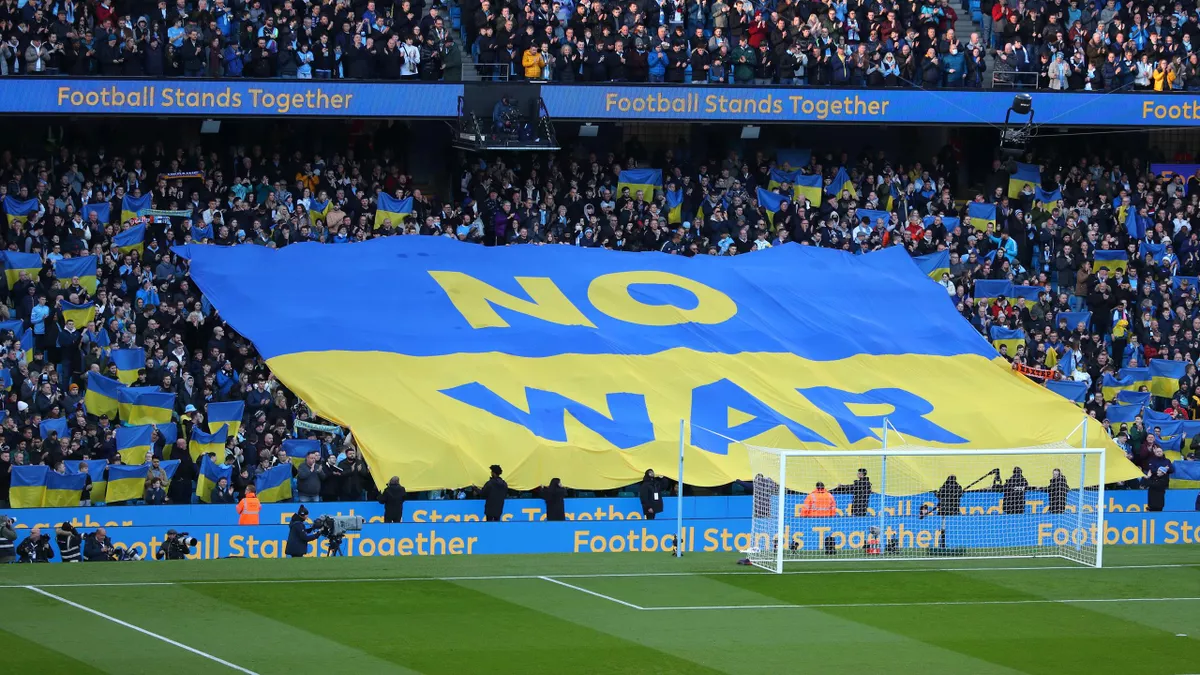
It is possible that Ukrainian flags or armbands have been worn by football players or fans in support of Ukraine during football matches due to the ongoing war in the country. The conflict in Ukraine began in 2014 when Russia annexed Crimea and pro-Russian separatists declared independence in eastern Ukraine. The conflict has since escalated, with thousands of people killed and large parts of the region devastated by fighting.
Football has been affected by the conflict, with some matches being moved or cancelled due to security concerns. However, football has also been used as a way to show support for Ukraine and to raise awareness of the conflict. For example, Ukrainian footballers have worn armbands with the Ukrainian flag during matches, and fans have brought flags and banners to matches to show their support.
However, the use of political symbols in football is often controversial, and some governing bodies, such as FIFA and UEFA, have strict rules prohibiting the display of political symbols during matches. As a result, the use of Ukrainian flags or other political symbols in football may be subject to scrutiny or disciplinary action.
I believe politics and football shouldn’t mix, there are rules and regulation about politics in football, yes they are making a stance on Black Lives Matter, War against Ukraine or the LGBTQ community, but it comes to a point where football is football, you can do your political stance off the field, I love how the media jumps on the Ukraine train with logos of the Ukraine flag, it’s nice and of course I don’t want to see anyone hurt. Where was the media when we (UK/USA) went and invaded Afghanistan & Iraq, where was their flags? Should they both have been kicked out of World Cup & Euro at the time.
I think it’s wrong of FIFA to kick Russia out of the competition, it’s the president that decided to go to war with Ukraine, why punish the team? They have nothing to do with the decision to go to war. Shouldn’t all Russian nationality be kicked out of European clubs? If this was the case.
There are two sides to this argument.
-
Ban Russia in the World Cup, this seems like a reactionary thing to do, there’s no negative points to this. There would be less exposure if the players for or against the war
-
Let them compete in the World Cup, if the players are against the war, the exposure they would get saying it during the World Cup is crazy.
Imagine your whole life you trained and prepare for a sporting event and then all of a sudden that has been taken beneath you.
Pros:
-
Raise awareness: Football is a powerful platform that can reach millions of people around the world. By raising awareness of important social and political issues, footballers and clubs can help to inspire positive change.
-
Encourage diversity: Football can be a catalyst for encouraging diversity and inclusivity. By celebrating diversity and promoting tolerance, footballers and clubs can help to create a more tolerant and accepting society.
-
Promote activism: Football can encourage activism and encourage people to become involved in social and political causes. By using their platform to raise awareness and call for change, footballers and clubs can help to create a more engaged and empowered citizenry.
Cons:
-
Divisive: Politics can be a divisive issue that can create tension between players, fans, and teams. Football is meant to bring people together and unite them through a shared love of the sport, and introducing political issues can create unnecessary division.
-
Interference with sport: Football is primarily a sport, and introducing political messages or symbols can detract from the enjoyment of the game. For many fans, football is a way to escape from the problems of the world, and introducing politics can take away from this experience.
-
Bias: Introducing political messages or symbols into football can create an unfair advantage or disadvantage for certain teams or players. This could potentially affect the outcome of matches and tournaments, leading to accusations of bias or favouritism.
-
Violation of regulations: Both FIFA and UEFA have strict rules prohibiting the display of political symbols during matches. Violating these rules can result in fines or other penalties, potentially harming clubs and players who are trying to make a political statement.
Catch you in the next one.
You must be logged in to post a comment.