
Few things in football are as mesmerising as watching a midfield trio who work in perfect harmony to control the game. They are the heart and soul of any team, the ones who dictate the tempo, drive the play forward and create chances for their teammates. Over the years, we have been lucky enough to witness some of the most talented midfield trios in football history, but two of the most recent ones stand out: Iniesta, Xavi and Busquets from Barcelona and Modric, Kroos and Casemiro from Real Madrid.
When we think about the midfield trios that have made a lasting impact on the game, we can’t help but feel a sense of affection towards them. It’s almost as if they are more than just football players, but rather a part of our lives. Iniesta, Xavi and Busquets, with their elegant passing, exceptional vision and impeccable control, made us fall in love with the beautiful game even more. Similarly, Modric, Kroos and Casemiro, with their relentless work rate, pinpoint accuracy and tactical intelligence, have won our hearts with their hard work and dedication to the sport.
In this article, we will delve deeper into these two midfield trios, exploring their unique styles of play, their strengths and weaknesses, and the impact they have had on their respective teams. So sit back, relax, and let’s take a trip down memory lane as we compare two of the most beloved midfield trios in modern football.
The Barcelona Way: Iniesta, Xavi, and Busquets
Playing style
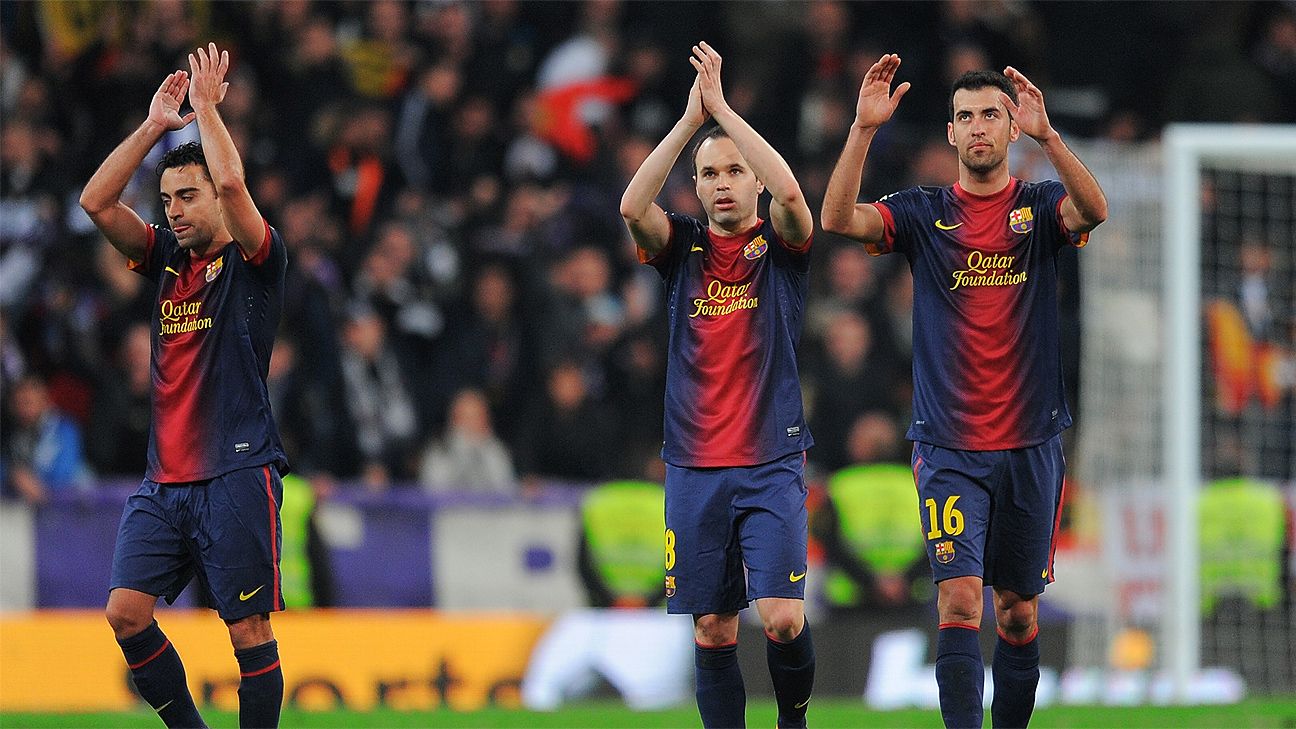
The playing style of Iniesta, Xavi, and Busquets, collectively known as the ‘Barcelona Way’, was based on possession football, quick passing, and intricate movement. The trio operated in a 4-3-3 formation, with Busquets as the holding midfielder, Xavi as the deep-lying playmaker, and Iniesta as the attacking midfielder.
Busquets acted as the anchor of the team, providing cover for the defence and recycling possession with his precise passing. Xavi was the heartbeat of the team, dictating the tempo of the game with his vision and passing range, while Iniesta added creativity and flair to the attack with his dribbling skills and ability to find pockets of space. Together, they formed an unstoppable midfield machine that dominated possession, controlled the game’s rhythm, and carved open defences with their intricate passing triangles.
Strengths and Weaknesses
The Barcelona midfield trio’s greatest strength was their ability to retain possession and control the game’s tempo. They had an exceptional understanding of each other’s movements and could execute intricate passing moves with ease. Their possession-based style meant that they could suffocate the opposition and force them to chase the ball, leading to tired legs and openings in the defence. Moreover, their technical brilliance allowed them to break down defences with ease and create chances for the forwards.
However, their style of play also had its weaknesses. Their possession-based style could be slow and predictable at times, allowing teams to defend deep and frustrate them. Moreover, their lack of physicality could leave them vulnerable to teams that played a more direct style of football and targeted them with aggressive pressing.
Impact on Barcelona
The Barcelona midfield trio played a crucial role in the club’s success during their era. They helped Barcelona dominate La Liga and the Champions League, winning numerous titles and establishing the club as one of the greatest teams in history. Their possession-based style of play was the foundation of Barcelona’s tiki-taka philosophy, which influenced the way football was played globally.
Their impact on the club was immense, and their legacy lives on even after their departure. Their playing style and tactical intelligence inspired a generation of footballers and coaches, and their influence on the sport will be felt for many years to come.
The Real Madrid Trio: Modric, Kroos, and Casemiro

Playing Style
Modric, Kroos, and Casemiro are known for their unique playing style, which is based on a balance of attacking flair, control, and defensive solidity. Modric is the creative force in the midfield, with his excellent dribbling skills, vision, and passing range. Kroos is the team’s metronome, with his exceptional ball control, passing accuracy, and ability to control the tempo of the game. Casemiro, on the other hand, is the midfield enforcer, responsible for breaking up opposition attacks and protecting the defence.
Strengths & Weaknesses
One of the key strengths of this midfield trio is their versatility and adaptability. They can seamlessly switch between a defensive or attacking style of play, depending on the situation. Another strength is their ability to control the game’s tempo and possession, which allows them to dominate games. Additionally, Modric’s dribbling skills, Kroos’s passing accuracy, and Casemiro’s defensive prowess make them a complete midfield unit.
One weakness of this trio is their lack of physicality, especially in the absence of Casemiro, who is the only true defensive midfielder in the team. Another weakness is their reliance on Modric and Kroos to create chances, which can make them predictable and easy to defend against.
Impact on Real Madrid
The Modric-Kroos-Casemiro trio has been a crucial part of Real Madrid’s recent success, helping them win four Champions League titles in five years. They have provided the team with the perfect balance of attacking creativity and defensive solidity, allowing them to dominate games and control the midfield battle. Their ability to work together seamlessly has been key to Real Madrid’s success, as they complement each other’s strengths and cover each other’s weaknesses.
Off the pitch, this trio has also played an important role in maintaining the team’s harmony and spirit. Their friendship and camaraderie have been well documented, and they have been praised for their leadership and professionalism within the squad.
Overall, the Modric-Kroos-Casemiro midfield trio has established itself as one of the best in the world, showcasing exceptional skill, tactical intelligence, and teamwork. Their impact on Real Madrid’s recent success cannot be overstated, and they will undoubtedly go down in history as one of the greatest midfield trios of all time.
comparing the two trios
When comparing the two trios, it’s evident that they have different playing styles and strengths, but they share one similarity: they’ve been instrumental in their teams’ success. The Iniesta, Xavi, Busquets trio won numerous domestic and international titles with Barcelona.
On the other hand, the Modric, Kroos, Casemiro trio has been equally dominant, winning four Champions League titles, four Club World Cup titles, and three La Liga titles, among others. They have also helped Real Madrid establish themselves as a formidable force in European football.
In terms of playing style, the Barcelona trio’s possession-based football was centred around intricate passing, patient build-up play, and quick movement. They were masters of retaining the ball and creating chances by working the ball into tight spaces, often through their signature tiki-taka style of play. Busquets provided the defensive cover, Xavi controlled the tempo, and Iniesta added the creative flair.
In contrast, the Real Madrid trio has a more direct approach, with Modric and Kroos pulling the strings from deeper positions, and Casemiro providing the physicality and defensive cover. They excel at playing quick counter-attacks, with Modric and Kroos frequently unleashing long-range passes to create goal-scoring opportunities.
While both trios have their unique strengths and weaknesses, they have had a massive impact on their respective teams. The Barcelona trio was the backbone of the club’s most successful era, and their influence on the club’s footballing philosophy continues to be felt even after their departure. Similarly, the Real Madrid trio has been the driving force behind the club’s recent success, helping them win three consecutive Champions League titles and dominate Europe.
Looking back at the legacies of these two trios, it’s hard not to be in awe of the footballing genius that they brought to the game. The way they controlled the midfield, dictated the tempo of the game, and set up their teams for success was a joy to behold. Iniesta, Xavi, and Busquets were the embodiment of the Barcelona way, while Modric, Kroos, and Casemiro were the epitome of Real Madrid’s counter-attacking prowess.
It’s unlikely that we will ever see a midfield trio quite like these again. They had a unique chemistry and understanding of each other’s game, honed through years of playing together and a shared passion for the beautiful game. As the football world continues to evolve, we may see new midfield trios emerge and take the sport to new heights, but they will always be measured against the legacies of Iniesta, Xavi, Busquets and Modric, Kroos, Casemiro. Their impact on the game will be felt for generations to come, and they will remain an inspiration to young footballers around the world.
Catch you in the next one.