
Introduction
Soccer, known as football in many parts of the world, is not just a sport; it’s a cultural phenomenon that unites millions of fans globally. Behind the breathtaking goals and mesmerizing skills lies the strategic aspect of the game known as Football tactics. To truly understand how the game has evolved tactically, one must delve into ‘Inverting the Pyramid: The History of Football Tactics’ by Jonathan Wilson. This seminal book offers a comprehensive exploration of the development of football tactics throughout history, unraveling the threads that have shaped the beautiful game we know today.
Jonathan Wilson, an esteemed sports writer and historian, is the author behind this masterpiece. His passion for football and intricate knowledge of the sport make him the perfect guide to navigate the evolution of football tactics. In this book, he presents a captivating narrative that takes readers on a journey through time, from the early days of football to the cutting-edge strategies employed by modern teams.
The Origins of Football Tactics

The book commences with an exploration of the early days of Football and the rudimentary tactics employed by teams in the late 19th and early 20th centuries. During this era, Football was still in its formative years, and the prevalent formation was the 2-3-5, which consisted of two full-backs, three half-backs, and five forwards. This attacking-oriented setup emphasized the importance of scoring goals and relied on direct play and quick passes to penetrate the opposition’s defence.
As the game progressed, teams began to experiment with defensive formations to counter the aggressive approach of their opponents. A pivotal point in tactical history was the introduction of the “WM” formation by Herbert Chapman in the 1920s. The “WM” formation, named after the distinctive shape it formed on the pitch, consisted of three defenders, two defensive midfielders, three attackers, and two wide forwards. This setup provided a more balanced approach to both defence and attack, marking a significant shift in tactical thinking.
The Evolution of Defensive Football Tactics

Football tactics continued to evolve, and the book delves into a fascinating era where a revolution in tactical approach occurred. The 1970s brought about a seismic shift in football tactics, with Rinus Michels, the legendary Dutch coach, leading the charge. Michels introduced a revolutionary concept known as “Total Football,” which would forever change the way the game was played.
Total Football was characterized by the fluidity of positions on the field, allowing players to interchange roles seamlessly. This tactical innovation bewildered opposition defences and created a new paradigm in Football tactics. Players were no longer confined to specific positions but were encouraged to adapt to the flow of the game, leading to a more dynamic and fluid style of play. The Dutch national team, under Michels’ guidance, showcased the true potential of Total Football, leaving an indelible mark on the sport.
Tiki-Taka: The Art of Possession in Football
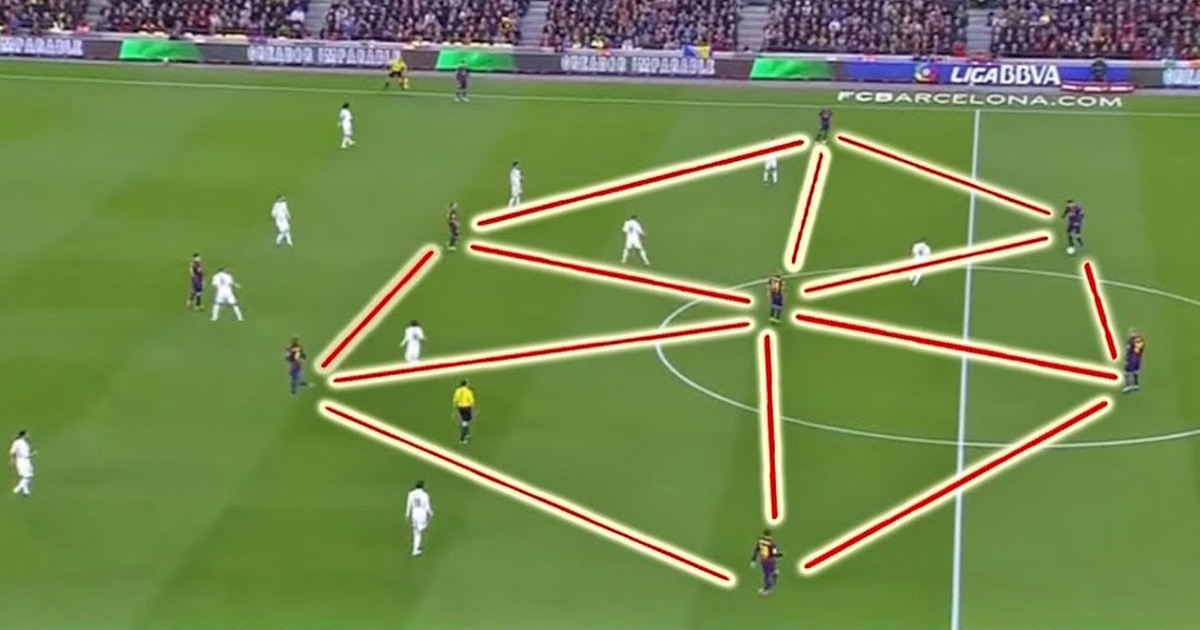
Fast forward to the 21st century, and the book explores the rise of a new tactical phenomenon – Tiki-Taka. Popularized by FC Barcelona and the Spanish national team, Tiki-Taka revolutionized the way possession-based football was played. The hallmark of Tiki-Taka was short, precise passes and a relentless emphasis on maintaining possession of the ball.
Coaches like Pep Guardiola at Barcelona and Vicente del Bosque with the Spanish national team were instrumental in perfecting this mesmerizing style of play. Tiki-Taka proved to be highly effective, frustrating opponents and dominating matches with a patient and probing approach. The success of Spain in international competitions and Barcelona’s dominance in club football during this era solidified Tiki-Taka as one of the most influential tactical systems in modern Football .
Impact on the Global Game
‘Inverting the Pyramid’ not only provides an in-depth historical analysis of Football tactics but also explores the profound impact these tactical innovations have had on the global football landscape. The book highlights how certain tactical philosophies have influenced the direction of the game and how strategic trends have spread across different continents.
For instance, the Total Football concept introduced by Rinus Michels had a far-reaching influence on the tactical approach of numerous teams worldwide. Many coaches and players adopted elements of Total Football and integrated them into their own strategies, resulting in a more fluid and dynamic style of play. This tactical innovation not only impacted the way the game was played on the field but also left a lasting legacy in the minds of football enthusiasts and aspiring players.
Similarly, Tiki-Taka’s success with Barcelona and the Spanish national team inspired many clubs and nations to prioritize possession-based football. The emphasis on short passing, quick ball circulation, and intelligent movement became a sought-after style that teams aspired to emulate. Tiki-Taka’s impact was felt far beyond Spain, with teams from various leagues adopting similar possession-based tactics to gain a competitive edge.
Learning from the Past
One of the key takeaways from ‘Inverting the Pyramid’ is the importance of learning from the past to shape the future of Football tactics. By studying historical approaches and understanding how tactical ideas evolved, players, coaches, and enthusiasts gain valuable insights into the game’s strategic depth.
The book encourages readers to appreciate the evolution of Football tactics as a continuous learning process. It emphasizes the significance of adopting tactical principles that align with a team’s strengths and style of play. By drawing inspiration from past tactical innovations and adapting them to suit modern demands, coaches can create systems that maximize their players’ potential.
Aspiring tacticians can benefit immensely from understanding the historical context of different tactical systems. Learning how legendary coaches and teams approached the game tactically allows aspiring coaches to develop their own unique philosophy. Armed with knowledge of the game’s tactical heritage, they can innovate and experiment to craft new strategies that might shape the future of Football.
Jonathan Wilson’s ‘Inverting the Pyramid: The History of Football Tactics’ is a captivating masterpiece that enriches our understanding of football tactical evolution. From the early days of direct attacking to the mesmerizing fluidity of Total Football and the possession-centric Tiki-Taka, this book offers a comprehensive journey through Football tactical heritage.
It demonstrates how tactical ideas have evolved over time, influencing the way the game is played and creating a lasting impact on the global football community. ‘Inverting the Pyramid’ not only chronicles the tactical innovations but also sparks inspiration for future generations of players and coaches.
As Football continues to evolve, this historical exploration remains a valuable resource for anyone seeking to unravel the intricacies of the game’s tactical development. Whether you are a die-hard football enthusiast, a budding coach, or simply curious about the beautiful game, ‘Inverting the Pyramid’ is a must-read for every individual passionate about Football .
Catch you in the next one.