
If you are a football fan, you might have asked yourself this question – Do great players become great managers? It is a topic that is highly debated among football enthusiasts, and it is a question that doesn’t have a definitive answer. In this article, we will delve into the topic and explore the reasons behind why some great players become successful managers while others don’t.
The Ideal Story: From a Player to a Great Manager

There are numerous examples of players who have transitioned to become great managers. Sir Alex Ferguson, Pep Guardiola, and Zinedine Zidane are a few names that come to mind. These players have won everything there is to win in football, and they have continued their success as managers.
For instance, Sir Alex Ferguson won numerous trophies as the manager of Manchester United, including 13 Premier League titles, 5 FA Cups, and 2 UEFA Champions Leagues. Pep Guardiola, on the other hand, has won a total of 31 trophies as a manager, including 3 Champions Leagues and 10 domestic league titles. Zinedine Zidane, who won the World Cup with France as a player, has won the Champions League 3 times with Real Madrid as a manager.
The Rise of Carlo Ancelotti: How a Non-Playing Career Paved the Way to Managerial Greatness
Carlo Ancelotti is another example of a football manager who never had a distinguished playing career but went on to achieve great things on the sidelines. Known for his calm and composed demeanor, Ancelotti has won numerous trophies with some of the biggest clubs in Europe, including AC Milan, Chelsea, Paris Saint-Germain and Real Madrid. His ability to build winning teams and adapt to different playing styles has earned him the respect of players and fans alike. Ancelotti’s tactical astuteness and man-management skills have made him one of the most sought-after managers in the game. Despite never reaching the same level of fame as some of his former players, Ancelotti’s success as a manager is a testament to the fact that it takes more than just on-field prowess to lead a team to glory.
The Other Side: Great Players Who Failed as Managers
However, not all great players have been successful in their transition to management. A prime example of this is Diego Maradona, who won the World Cup with Argentina in 1986. Despite his legendary status as a player, he struggled as a manager. He had a win percentage of just 36% as a manager, and he was sacked by numerous clubs.
Another example is Roy Keane, who won everything there is to win with Manchester United. He had a successful start to his management career with Sunderland, but he struggled at Ipswich Town, where he had a win percentage of just 28%.
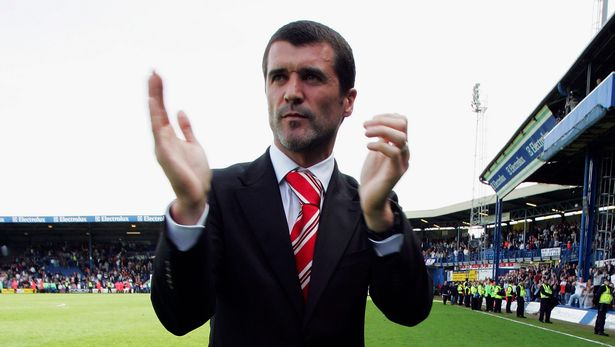
Why Do Some Great Players Become Great Managers While Others Don’t?
There is no one definitive answer to this question, but there are a few factors that can contribute to a player’s success as a manager. One of the most important factors is the player’s ability to communicate and motivate their players. Great players who become great managers are often excellent communicators and motivators, and they are able to get the best out of their players.
Another factor is a player’s tactical knowledge. Great players who become great managers often have a deep understanding of the game and are able to make tactical adjustments that can change the course of a game.
From the Sidelines to Stardom: The Rise of Jose Mourinho as a Manager.
Jose Mourinho is a prime example of a manager who wasn’t a great player but became a legendary figure in football management. Known for his fiery personality and tactical prowess, Mourinho has won numerous titles with top clubs across Europe, including Porto, Chelsea, Inter Milan and Real Madrid. Despite never reaching the heights of some of the game’s greatest players, Mourinho has earned the respect of the football world through his managerial achievements. His ability to motivate his players, adapt to different playing styles, and make game-changing decisions has made him one of the most successful managers of all time. Mourinho is proof that success in management is not dependent on being a great player, but on having a unique set of skills and characteristics that set you apart from the rest.

The Emotional Connection Between Players and Fans
As football fans, we often have an emotional connection with our favourite players. We idolize them, and we want them to succeed in every aspect of their lives. When a great player becomes a great manager, it is a joyous occasion for fans, and it creates a sense of nostalgia.
However, when a great player fails as a manager, it can be a heartbreaking experience for fans. We want our heroes to succeed, and when they fail, it feels like a personal failure. It is important to remember that being a great player doesn’t necessarily equate to being a great manager.
Conclusion
In conclusion, the question of whether great players become great managers is a complicated one. While there are examples of great players who have become great managers, there are also examples of great players who have failed as managers. There is no one definitive answer to this question, but it is clear that being a great player doesn’t necessarily equate to being a great manager.
FAQs
- Can a player become a great manager without winning anything as a player? Yes, it is possible for a player to become a great manager without winning anything as a player.
- Why do fans have an emotional connection with great players who become managers? Fans have an emotional connection with great players who become managers because they idolize them and want them to succeed in every aspect of their lives. When a great player becomes a great manager, it creates a sense of nostalgia for fans.
- What are some of the factors that contribute to a player’s success as a manager? Some of the factors that contribute to a player’s success as a manager include their ability to communicate and motivate their players, their tactical knowledge of the game, and their ability to make strategic decisions.
- Why do some great players fail as managers? There are many reasons why great players fail as managers, including their inability to communicate effectively with their players, their lack of tactical knowledge, and their inability to make strategic decisions.
- Is being a great player a guarantee of success as a manager? No, being a great player is not a guarantee of success as a manager. While great players may have the respect and admiration of their players, they still need to develop the necessary skills and knowledge to be successful in management.
See you in the next one.
You must be logged in to post a comment.